


Mine slurry pumps can be classified into metal pumps and rubber pumps (rubber-lined pumps) based on the materials of the flow-through components. Among them, metal pumps play a dominant role, while rubber pumps are currently in a supporting position. Here is a simple analysis of the two types of pumps:
1. Classified by operating conditions
Under normal circumstances, rubber can be applied to slurry pumps for conveying slurry with the largest particle size less than 10mm (average particle size 3mm). Its anti-wear property is superior to that of metal materials, so rubber will be given priority when conveying fine particle slurry without sharp corners. Metal pumps are selected when the particles are irregular and angular. Because the particles have sharp edges and corners, they can easily tear the rubber, causing damage to the rubber pump. This situation is particularly evident in iron ore, as in the beneficiation process of iron ore, most of the ore particles have sharp edges and corners. Rubber pumps are not suitable for application in iron ore, while metal pumps perform very well. In some non-ferrous metal mines, such as gold mines, because the particles are relatively regular, with round and oval particles being the majority, there is no tearing phenomenon in rubber pumps. Rubber pumps are cheaper than metal pumps, and thus are more widely used.
2. Classified by usage parameters
Under normal circumstances, due to structural and rubber-lined process reasons, rubber pumps (rubber-lined pumps) are generally smaller in size than metal pumps. Large-sized rubber pumps are rarely used in the field of mineral processing. When the flow rate is particularly large and the head is relatively high, the options for rubber pumps are relatively limited, while there are many types of metal pumps available at this time.
3. Classified by energy-saving effect during use
Due to the characteristics of rubber, which has a certain degree of elasticity and is prone to deformation when impacted by water and solid particles, the efficiency of rubber pumps is generally 3 to 5% lower than that of metal pumps.
4. Compare the prices of rubber pumps and metal pumps
Under normal circumstances, the price of rubber pumps is about 80% of that of metal pumps. When the working conditions are met and power consumption is not taken into account, users can give priority to using rubber pumps.
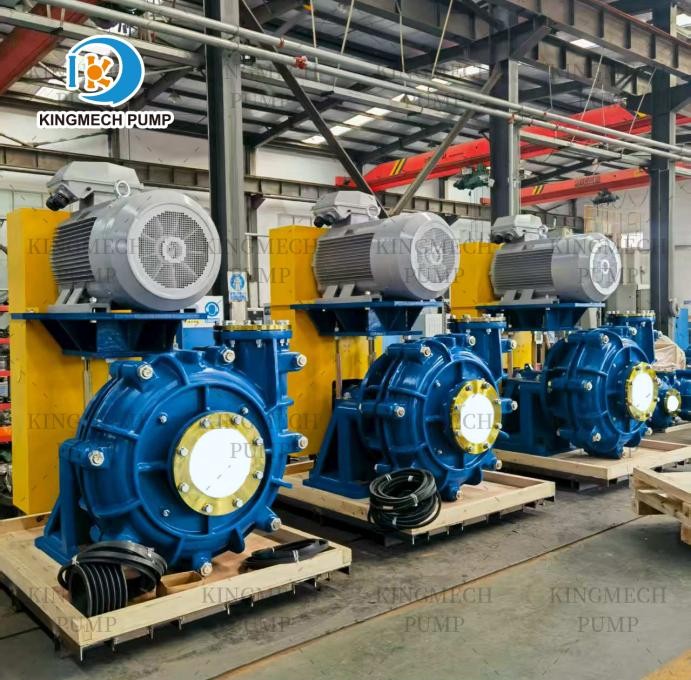
When it comes to choosing the appropriate material for flow-through parts, in addition to considering the above points, factors such as the temperature, concentration and corrosiveness of the medium should also be taken into account in practical applications. The flow-through parts are the core components in the slurry pump that come into direct contact with the medium. These parts play a decisive role in the overall quality of the slurry pump, and their selection should also be regarded as an important consideration factor in choosing a slurry pump.
Related News


